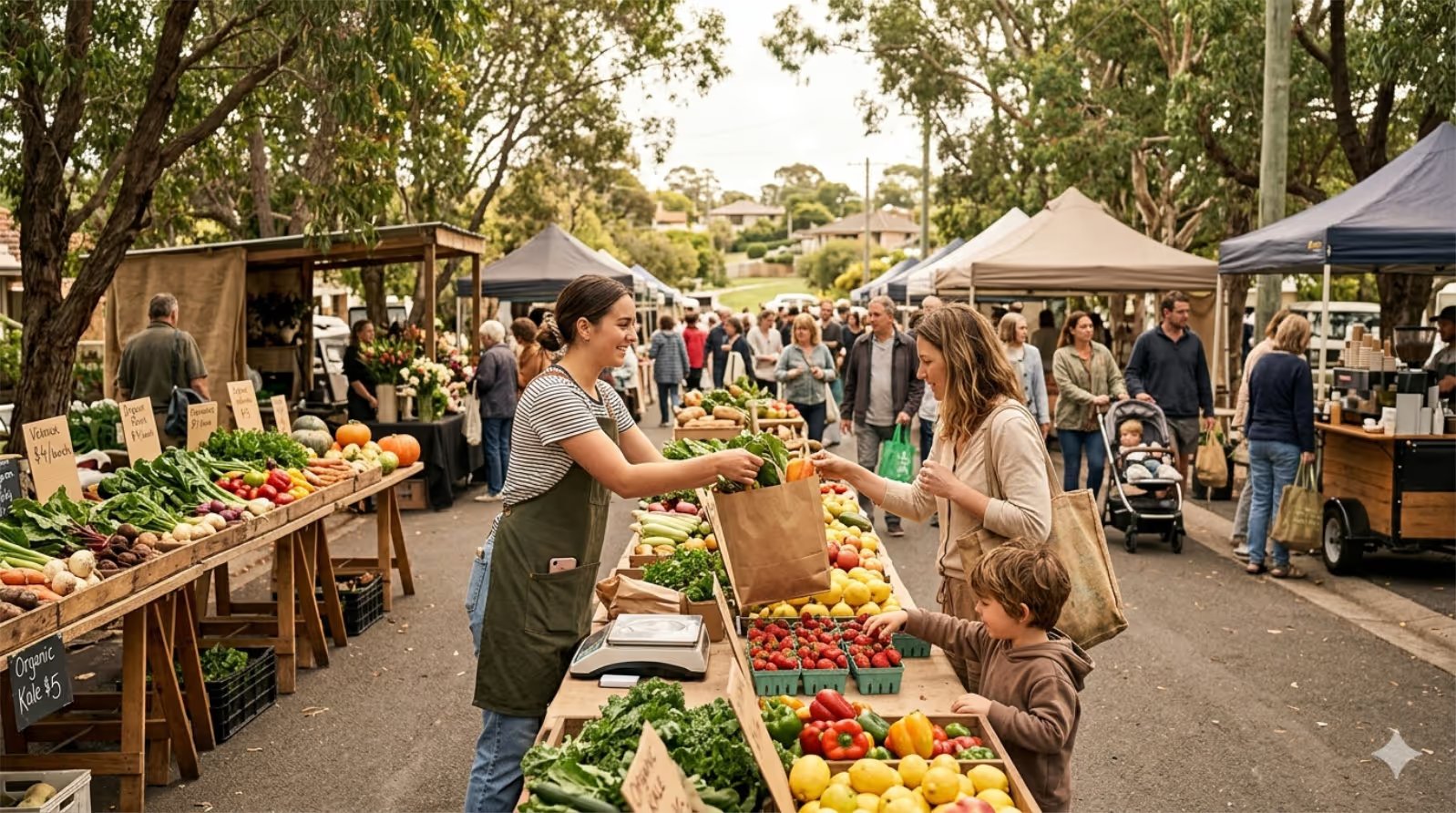
The transaction has become a relationship again. You know who grew it. You know where it came from. That changes everything about how it feels to buy something.
The deal that ran its course
For 30 years, the global economy offered Australians a remarkable deal. More for less. Cheaper clothes, faster delivery, wider choice. The supermarket displaced the greengrocer. The shopping centre absorbed the high street. The platform replaced the shopfront. All of it underpinned by supply chains that moved goods from wherever they were cheapest to wherever they were wanted, quickly and reliably.
It was a good deal. Most people took it.
But deals can run their course. And this one had a cost that took a while to show up. The cost was the thing that went away quietly while the cheap abundance arrived loudly. The grower you knew. The shopkeeper who remembered your name. The neighbour who sold you tomatoes from their garden. The sense that your spending mattered to someone real.
Deglobalisation didn't end the deal in a single dramatic moment. It just made the deal gradually worse. Supply chains that felt invisible started showing up in the news. Prices that had been falling for decades started rising. Goods that seemed permanently available started disappearing from shelves. And somewhere in that friction, Australians started making different choices.
Not out of sacrifice. Out of preference.
Signals happening now
These aren't predictions. You can already see them.
- Australia's organic farming industry reached $3.8 billion in revenue in 2024-25, growing at 10.1% a year for five years running. The appetite for food people trust, sourced from places they understand, is growing faster than almost any other part of the food sector.
- Over 60% of Australian shoppers now prefer retailers that use ethical sourcing practices. For a growing share of Australians, price is no longer the only thing on the table.
- Nearly 3 in 4 Australians changed their shopping behaviour in the past 12 months, with reduced non-essential spending and more intentional purchasing becoming the dominant pattern. People are buying less and thinking more about what they buy.
- Retail analysts expect a greater emphasis on local manufacturing and supply chain diversification in 2025, with regional partnerships becoming a competitive advantage rather than a cost.
- Community organisations and local groups are the fastest-growing small business category in Australia, recording a 36.2% increase in new registrations over the past year. People are organising locally in ways they weren't before.
Saturday morning, 2040
It's 2040. The farmers market in Geelong West has been running for 22 years. It started with 14 stalls. It now has 60. The council closed the car park behind the old supermarket three years ago to make room for it.
Maria buys her vegetables here every week. She has for twelve years. She knows the name of the person who grows her tomatoes. She knows which stall to avoid in late summer when the stone fruit isn't quite ready. She spends more here than she would at the supermarket. She doesn't particularly mind.
Two streets over, a general store opened in 2037 in what used to be a dry cleaner. It sells locally made bread, candles, cleaning products, and clothing from a designer in Ballarat. It's always full on a Saturday morning. The owner knows most of her customers by name. She sources everything within 200 kilometres if she can.
The big shopping centre at the edge of town is still there. But three of its anchor tenants have gone, replaced by a gym, a medical centre, and a community hall. The car park is never quite as full as it used to be.
This isn't a story about sacrifice. Nobody in this future is sitting around wishing for cheap fast fashion and anonymous big-box retail. The shift happened gradually and then it stuck, because what replaced the old model turned out to be better in ways that surprised people.
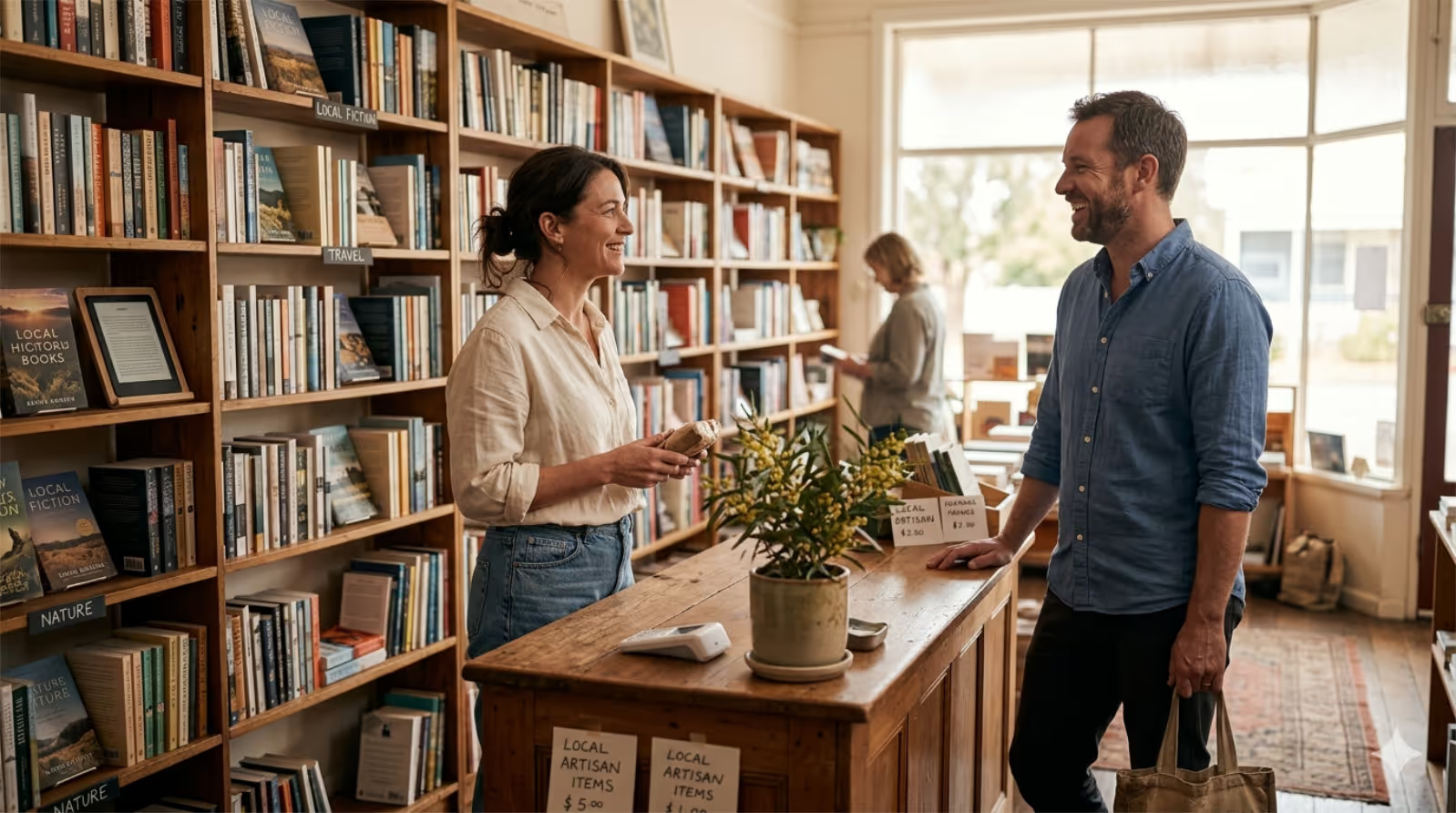
People buy fewer things. But the things they buy carry more meaning. They know where the coffee came from. They know who made the soap. That's not nostalgia. It's a preference.
The thing that grew back
When global supply chains started delivering less reliably and more expensively, buying local started to make more economic sense. Producers who had always been there found themselves viable in a way they hadn't quite been before. Farmers selling at markets. Local restaurants sourcing nearby. Subscription produce boxes. All of it had existed at the edges of the economy for years. Now it was moving toward the centre.
The shift wasn't just economic. Something cultural moved alongside it. A generation that grew up with same-day delivery and infinite choice started asking a different question: is this actually better? Cheaper clothes that fell apart after six months. Food that travelled 15,000 kilometres to reach the bowl. A transaction that began and ended on a screen with no person involved at any point.
In this future, people buy fewer things. But the things they buy carry more meaning. They know where the coffee came from. They know who made the soap. They know that the money they spent at the market on Saturday stayed in their suburb longer. That's not nostalgia. It's a preference.
What the high street became
The transformation of the high street happened slowly, then suddenly, then in a way nobody could quite reverse.
The big chains that left during the difficult years of the mid-2020s didn't come back. The spaces they occupied became things the community actually needed: health clinics, co-working spaces, local retailers, food producers selling direct. The departure of the big brands turned out to be exactly what the high street needed.
Community gardens moved from hobby project to genuine urban infrastructure. Local councils in Victoria legislated to support them from 2027. Gardens that had been managed by small volunteer groups got proper funding and a waiting list. Produce from community gardens showed up in local restaurants, schools, and markets.
The relationship between where people lived and where people spent changed. Not completely. Not everywhere. But enough that the 2040 version of a suburb felt different from the 2025 version. More textured. More connected. More like somewhere rather than anywhere.
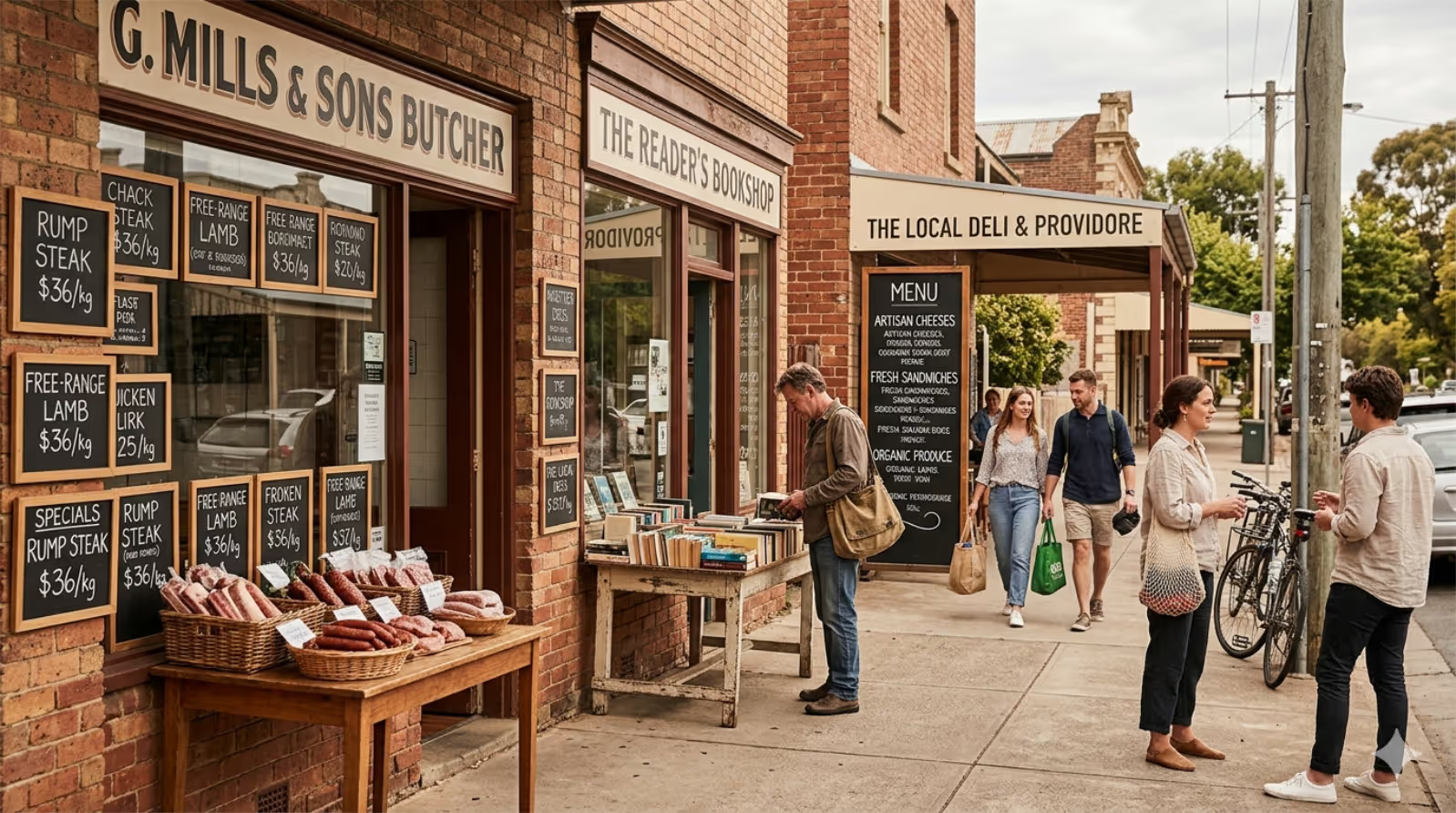
The high street became more useful and more alive than it had been in two decades. The departure of the big brands turned out to be exactly what it needed.
The economy that got closer
The shift toward local changed more than where people shopped. It changed who produced things, how things were made, and what people thought the economy was for.
Small producers who had always existed at the edges of the economy moved toward its centre. The farmer who had spent years barely staying profitable against the supermarket's lower prices found that the market had changed. The small clothing label that had spent a decade competing with fast fashion found that fast fashion had lost its grip on a generation that had grown tired of it.
Supply chains got shorter. Not because anyone told them to. Because shorter supply chains turned out to be what people wanted to buy from, once the economics made it possible and the values made it desirable.
The businesses that saw this early and adapted are the ones that still have the trust of the people who shop with them. They sourced regionally, partnered with local producers, and built relationships rather than just logistics. The ones that didn't are still there, but competing harder for a smaller share of a more deliberate market.
What would have to be true
This scenario is plausible but it isn't inevitable. Four things would need to keep going in the same direction.
The shift in values has to stick. The move toward more conscious buying is real and evidenced. But it competes with cost pressure, convenience, and the appeal of cheap abundance. If things get cheap and easy again, some of the shift could slow. The scenario depends on the new preferences becoming lasting rather than circumstantial.
Local producers and small retailers have to become genuinely viable at scale. The economics of local have been shifting in the right direction. But small producers still face real barriers: finding money to grow, the cost of moving goods, and competition from huge platforms with reach and pricing power that most small businesses can't match. Policy, infrastructure, and sustained customer loyalty all need to keep moving together.
Community infrastructure has to get proper funding. Community gardens, local markets, and independent high streets need the same serious attention that has historically gone to shopping centres and logistics networks. That means councils, planners, and governments treating local economic infrastructure as worth investing in, not just worth praising.
The way Gen Z discovers and buys things has to change. TikTok and Instagram don't point people toward the local producer or the Saturday market. They point toward things that can be filmed, tagged, and delivered within 48 hours. The kind of mindful shopping this scenario depends on runs directly against a culture built around impulse buying from global platforms. Australia's under-16 social media restrictions, which came into force in December 2025, are the first policy signal that the relationship between young people and these platforms is changing.
Signal sources
- IBISWorld, 'Organic farming in Australia industry analysis'
- Accio, 'Retail trends Australia 2025: growth drivers and consumer insights'
- Resonate CX, '2025 customer shopping behaviours and purchase trends in Australia'
- Inside Retail Australia, 'Australian retail in 2025: key trends, challenges and opportunities'
- Ian Hewitt and Associates, 'Which small business sectors will boom in Australia in 2025?'
- GOAT Agency, 'Gen Z social commerce: 2025 trends and strategies'
- Sprout Social, 'Social media demographics Australia: 2026 age and user statistics'
What this means for your business
Professional services
If this future arrives, the businesses you advise will be operating in a market where trust is increasingly local and personal. The question isn't just where people shop. It's what they trust, who they trust it from, and why. Businesses built around price and scale are navigating a world where neither is the decisive advantage it once was. The conversation worth having now: if your clients' customers cared more about where something came from and who made it than about the price, what would need to change?
Healthcare
In this future, the shift toward local and community has real implications for how healthcare is delivered and experienced. People who shop locally, grow food locally, and take part in community life have different health outcomes and different expectations of care. The appetite for preventive, community-based support, rather than centralised treatment, grows alongside the local economy. Healthcare organisations that are embedded in their communities, rather than operating above them, will find themselves better positioned than those that aren't.
Retail
This scenario is the most directly relevant for retail. The brands that come through the shift aren't necessarily the biggest or the cheapest. They're the ones that people trust and feel something about. The move from one-off transaction to ongoing relationship is already underway. The question for every retailer is whether they're building something people want to have a relationship with, or still selling like the old model in a world that's moving on from it.
Consumer products
Where something comes from, how it was made, and who made it are moving from things a few people cared about to things most people expect. The companies that can tell a genuine story here have something that an anonymous global supply chain simply can't replicate. The opportunity isn't just to reduce supply chain risk. It's to build the kind of story that resonates with a generation of people who are actively choosing to care more about what they buy.
Education
The shift toward local creates demand for skills that the education system hasn't been producing at scale. Growing food sustainably, running small local businesses, building shorter supply chains, and developing community economies are growth areas that don't fit neatly into the existing curriculum. The institutions that see this and build real capability around it won't just be doing something worthwhile. They'll be genuinely relevant to the economic life of the communities they're part of.
The question worth sitting with
For 30 years, the cheapest option usually won. That was the deal. And for 30 years, a lot of what made communities feel like communities quietly eroded alongside it.
The market down the road was always there. It was just undercut.
The question isn't whether this future is coming. It's whether your business is part of what replaces the old model, or still optimised for a deal that's running out of road.