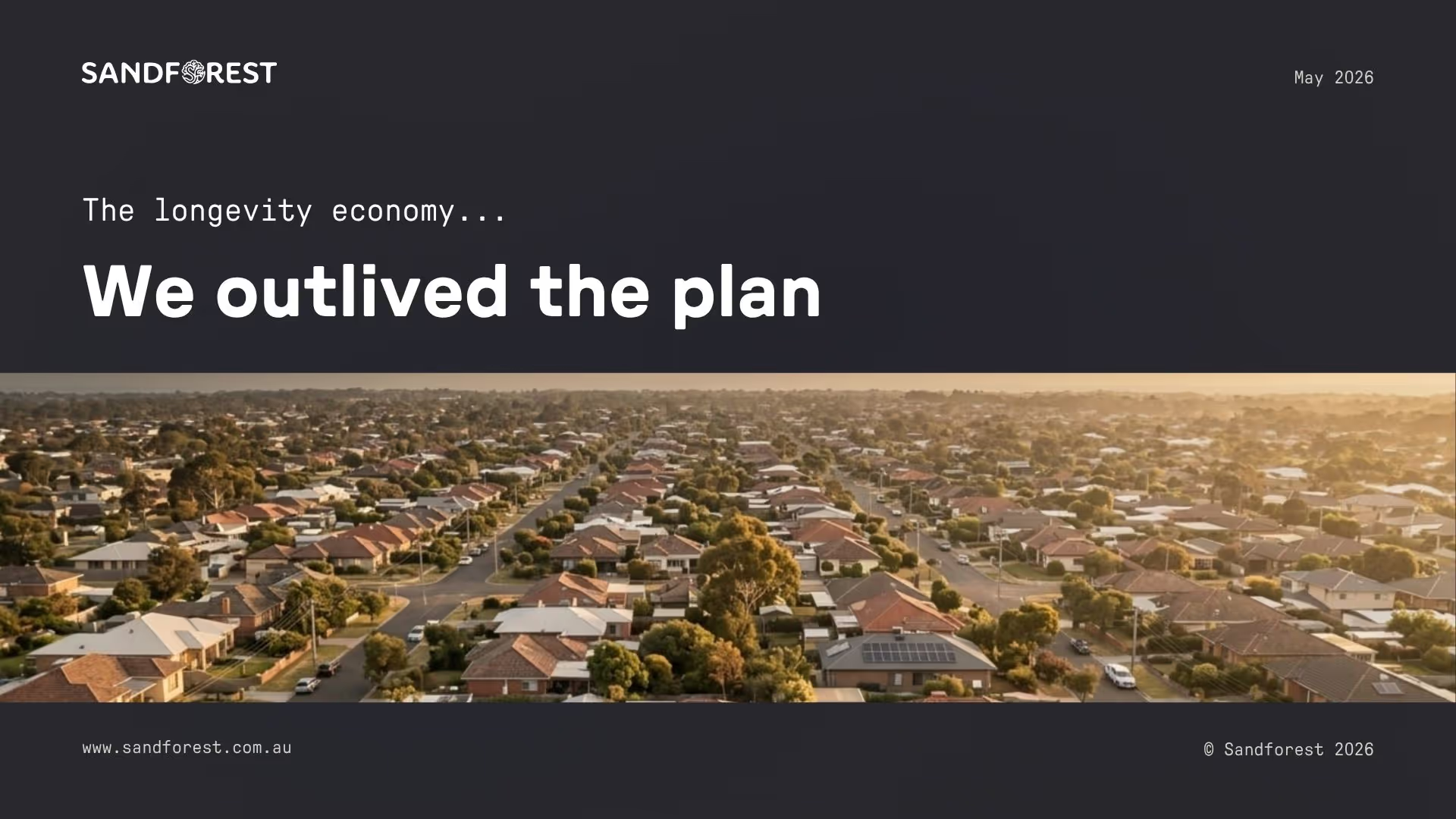
A woman who retires at 67 and lives to 90 will outlive her super by a decade. Nobody told her that when she opened her first account.
The gift we didn't plan for
Australians are living longer than any generation before them. A woman who reaches 65 today can expect to live to nearly 88. A man the same age will reach around 85. A growing share will see 95. Some will reach 100.
This is a genuine gift. More time. More years with the people who matter. More chances to do the things you kept putting off.
But every major system that shapes Australian life was built around a different assumption. Superannuation was designed for a retirement that lasts 10 to 15 years. Aged care was built for a final chapter of a few years, not two decades. The housing market was set up for a world where families lived in large homes for a season and then moved on. The career ladder assumed the people above you would eventually leave.
None of it was designed for a country where retiring at 67 and living until 90 is increasingly ordinary.
The Labor government's May 2026 tax reforms acknowledged it explicitly for the first time. Policy is beginning to move. The gap between the life Australians are actually living and the systems built to support it keeps getting wider.
Signals happening now
These aren't predictions. You can already see them.
- A woman who reaches 65 in Australia today can expect to live to nearly 88. Superannuation was built for a retirement lasting 10 to 15 years. It now commonly runs 20 to 30.
- Home ownership for Australians under 35 is back to 1947 levels. For Australians aged 35 to 44, it's back to 1954. Home ownership among Australians over 65 hasn't moved from its 1966 peak.
- It now takes an average of 11 years to save a 20% deposit, with 45% of weekly income required to service a mortgage. Australia's property value-to-income ratio has reached 8.2, well above the 20-year average of 6.8.
- The new Aged Care Act 2024 came into force on 1 November 2025, the biggest overhaul in nearly 30 years. Self-funded retirees moving into residential care now face costs exceeding $120,000 a year. A system built for a shorter old age is being repriced in real time.
- 79% of Australians believe their children will be financially worse off than they are. Australia's result is among the worst in the world. That's not a mood. That's a judgement.
Four generations of an ordinary family
It's 2040.
Linda is 72. She was a nurse for 40 years, the kind of career people respect and underpay simultaneously. She retired at 67, thought she'd be fine. She has enough super for about 12 years if nothing goes wrong. She's likely to live for another 20. She hasn't told her kids how the numbers look.
Her son Mark is 46. He and his wife rent in Geelong. They've been saving for a deposit for eight years. At current prices, with a combined income of $155,000, they're probably four years away from a bank taking them seriously. Mark's parents are in their early 70s, still in the house in Highton. He knows, without anyone saying it, that the house will need to fund their last years. He's not counting on it.
His sister Jess is 40. She still lives at home. Not because she hasn't tried. She pays board, does her share. It mostly works. She's 40 and she's saving harder than she ever has. She might get out by 45.
Linda's mother Pat is 93. She's in an aged care facility twenty minutes away. The fees are $118,000 a year. Linda and her brother divide it. The family home in Shepparton was sold two years ago to cover the gap between Pat's pension and the bills.
There was nothing left.
Four generations of an ordinary Australian family. Not unlucky. Not careless. Not wealthy, not struggling. Just living longer than the system was built for.

Four generations of an ordinary Australian family. Not unlucky. Not careless. Just living longer than the system was built for.
The gap, in plain terms
The housing market didn't seize up because older Australians are selfish. It seized up because the family home is the retirement plan for millions of people whose super was never sized for 25 or 30 years without it. The house can't move until the plan changes. The plan can't change until the house moves. The people waiting for it to turn over are getting older every year.
The career ladder didn't stall because older workers are blocking younger ones deliberately. It stalled because people who expected to retire at 65 found the maths didn't work at 68, or 70, or 72. The roles above the 45-year-olds didn't open. The roles above the 30-year-olds didn't either. Three generations stacked. Nobody moving because nobody above them can afford to.
The aged care system didn't fail because nobody cared. It failed because nobody fully modelled the workforce required for a country where living to 95 is ordinary. We need 400,000 more aged care workers by 2050. They aren't coming. The people providing care are increasingly in their 60s, working because they can't afford not to. Some care falls to family. Some doesn't happen adequately at all.
The wealth didn't fail to transfer because older Australians spent it carelessly. The family home funded residential care at $120,000 a year. For a decade. There wasn't much left.
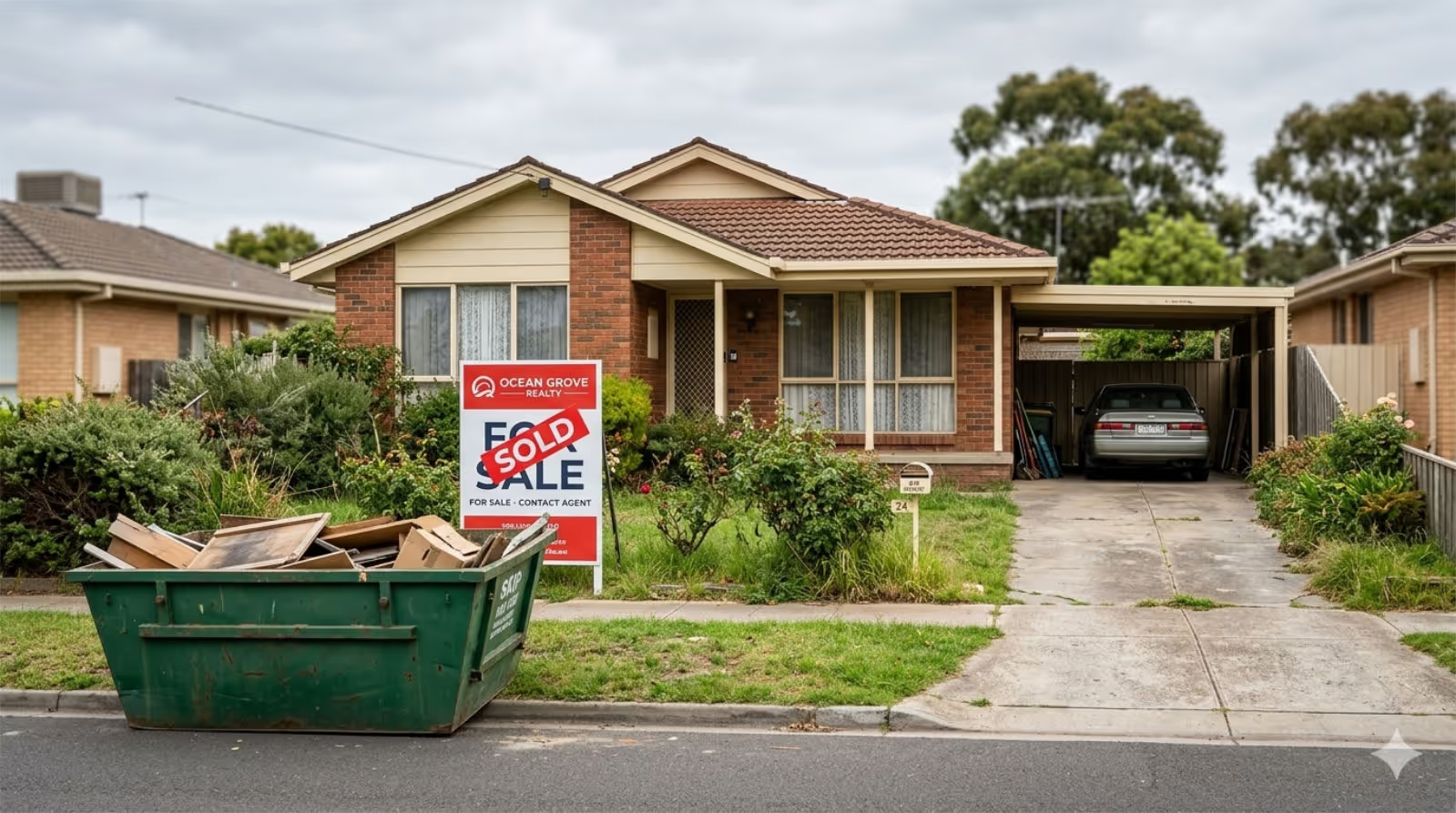
The family home funded residential care at $120,000 a year. For a decade. There wasn't much left.
What it costs people
The measurable stuff is hard enough. What doesn't show up in data is harder.
Working at 73 when your body wanted to stop at 68. Not because you didn't save. Because you saved for the retirement that was planned for you, and the life you're living is fifteen years longer than the model. Nobody had that conversation with you when you were 30 and opening your first super account.
Carrying financial pressure in two directions at once. Your parents need support. Your kids can't get started. Your mortgage is still running. You're 55 and this is the ordinary experience.
Watching your parents decline over 20 years rather than five. Being the person who makes the hard calls, the care facility decisions, the financial decisions, across a very long time. The emotional load of this is real and largely invisible in any system designed to support it.
And then the slow arrival, somewhere in your 40s, of a realisation: the life your parents had, the home they owned in their 30s, the retirement at 65, the inheritance that helped you get started, is not the life you're going to have. Not because of anything you did wrong. Because the timeline changed and the systems didn't.
79% of Australians already believe their children will be financially worse off than them. That's not pessimism. That's a country doing the maths and finding the answer uncomfortable.
What would have to be true
This future isn't inevitable. But preventing it requires three things to actually happen, not just get announced.
The housing market has to actually turn over. Older Australians need somewhere genuinely worth moving to. Better retirement housing, real stamp duty reform, and financial incentives for downsizing need to arrive together. Any one of them alone won't shift a pattern this entrenched. The 2026 tax reforms were a start. The housing market won't move on tax reform alone.
Superannuation has to be redesigned for a life that runs 30 years past work. Higher contribution rates help. The harder problem is that a system designed for a 15-year retirement is being asked to fund one that lasts twice as long. Products that insure against outliving your savings need to move from specialist to mainstream. That requires the financial industry to build them and people to understand why they need them.
The aged care workforce has to be built. The numbers are clear. The workforce isn't there. Building it requires pay that reflects the work, training pathways that exist, and a shift in how we think about care as a career. None of these are quick. All of them are overdue.
Signal sources
- Australian Institute of Health and Welfare, 'Deaths in Australia: life expectancy'
- ABC News, 'Economic gap between older and younger generations on track to reach record levels'
- Australian Government Department of Health, 'About the new rights-based Aged Care Act'
- Pearls and Irritations, 'Aged care reform in 2025: an agenda for the next Australian government'
- Prime Minister of Australia, 'Tax reform for workers, businesses and future generations'
What this means for your business
Professional services
If this future arrives, a 50-year-old client has a 40-year financial horizon, not 15. How do you fund 30 years of retirement from a super balance built for 15? What happens to property values in a market that's been locked up for decades? What does estate planning look like when the inheritance arrives at 70? The firms building genuine expertise in the economics of a long life will be in a different conversation from those still planning around a timeline that no longer exists.
Healthcare
Healthcare organisations are already inside this scenario. The population living with chronic conditions across long lives is growing faster than a system built for acute episodes can handle. The question is whether your organisation is building capacity now: preventive care, home-based support, and workforce models that don't assume an endless supply of care workers in their 30s. The gap between need and capacity is already visible. By 2040 it will be the defining challenge.
Retail
The fastest-growing consumer group in Australia is people over 65, and they're financially complex in ways the previous generation wasn't. Some have substantial assets. Some are asset-rich and cash-poor. Some are running down savings that weren't sized for a life this long. Understanding which customer you're actually serving matters more than it ever has. The brand that genuinely serves older Australians, in design, in value, in respect, is building loyalty with a group that has 20 or more years of spending ahead.
Consumer products
The person buying your product in 2040 may be 75, living independently, and making decisions on a 20-year horizon. What works at 40 doesn't always work at 75. Packaging, usability, product longevity, and what value means across a longer life are all different. The companies redesigning for this aren't doing it as a social good exercise. They're doing it because it's the fastest-growing part of the market and most of their competitors haven't noticed yet.
Education
The institution that thinks its students are 18 to 25 is describing a shrinking share of its potential audience. People who work into their 70s need learning and reskilling across their whole adult lives. The demand for genuine requalification among people in their 40s, 50s, and 60s grows every year the retirement age moves. The institutions building real pathways for these students, not short courses bolted onto a university brand, but learning designed for people mid-life and mid-career, will be relevant for decades. Most aren't built for this yet. The ones that build for it first will be the ones worth attending.
The question worth sitting with
Parts of this future are already here. The housing lock-up is real. The super gap is real. The aged care workforce shortage is real. The families managing financial pressure across three generations are real. Linda and Mark and Jess are real, just with different names.
The question for every business isn't whether this future is coming. It's what you're doing about it right now, before the gap gets any wider. Which of your customers is already living this? What do they need that you're not yet offering? What does your own workforce look like in a country where people work longer and retire later? And what decisions could you make this year, not in 2040, that would matter?