The old fixes are losing their grip
July is the month where old fixes stop working as well as they used to. A ban isn't stopping teenagers. A pay rise isn't beating inflation. Renewables are breaking records while the next wave of projects stalls. In Victoria, One Nation just became the state's most popular party, nine months before an election. And obesity has quietly become the thing making more Australians sick than smoking ever did.
Society
The social media ban isn't stopping teenagers
Australia banned under-16s from social media in December. Three months later, a study published in the British Medical Journal found barely any drop in how much younger teens are using it.1 Some lie about their age. Some use old accounts. Some just switch to private browsing.
The government didn't rethink the law. It doubled the fines, from $49.5 million to $99 million, and gave regulators the power to demand internal documents from platforms.2 Snapchat, TikTok, YouTube, Facebook and Instagram are all under investigation right now.
Passing a law is the easy part. Making it work is turning out to be much harder.
Type: Established | Strength: Strong | Rationale: peer reviewed BMJ research corroborated by the government's own compliance data and confirmed new legislation doubling penalties.
Technology
Australia's AI watchdog is working on a shoestring
Australia has a new AI Safety Institute. Its job is to test powerful AI models and warn the government about the risks. Its budget is $29.4 million over four years. The UK spends roughly $460 million on the same job. Canada spends $50 million. Even Singapore, a much smaller country, spends more each year than Australia does in four.3
Australia's science agency isn't keeping pace either. CSIRO has slipped from third to sixth in the country's patent rankings, its worst result in years, as AI companies out file it.4
The agencies meant to understand AI and keep it in check are being outrun by the thing they're meant to watch.
Type: Emerging | Strength: Moderate | Rationale: ministerial statements reported in detail by one credible outlet, corroborated by independent patent ranking data showing a genuine resourcing and relevance gap.
Economy
Pay went up 4.75%. Prices went up more
Almost 2.7 million Australians on minimum or award wages got a pay rise from 1 July. It's the biggest rise since 2023, and the minimum wage passed $1000 a week for the first time.5
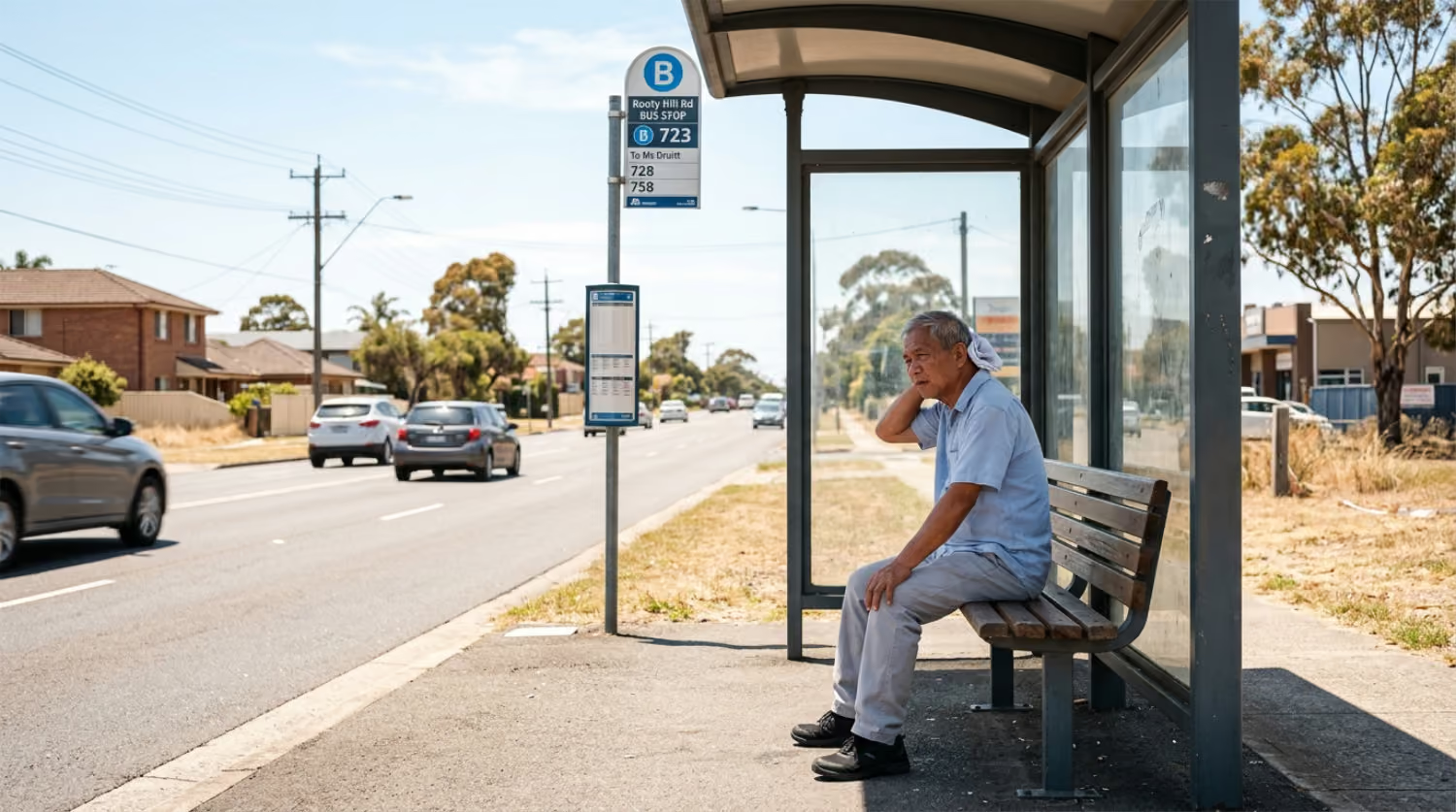
It's still not enough. Prices are expected to rise 4.8% this year, faster than the pay rise. The Fair Work Commission admitted as much. Workers on these wages are still earning less in real terms than they were five years ago.
Small business groups called it a tipping point they can't absorb. Unions called it welcome but short of what they asked for.6 Both are right.
Type: Established | Strength: Strong | Rationale: Fair Work Commission primary data corroborated by RBA inflation forecasts and independent reporting; the figures themselves aren't contested.
Environment
Renewables are having a great year. New projects aren't
Renewable energy supplied a record 43% of Australia's power last year. Home batteries are flying off shelves, up 260%. Australia is now the third biggest battery market in the world.7
But new wind and solar projects locking in funding and approval fell to just 2.3 gigawatts in 2025, one of the lowest totals in ten years.
That's the catch. What's built today isn't what keeps the grid clean tomorrow. Old coal plants are retiring on their own timeline. AI data centres are about to want a lot more power. If new projects don't pick up, the renewable share stops climbing right when the grid needs it most.8
Type: Emerging | Strength: Strong | Rationale: the Clean Energy Council's annual report is the industry's authoritative primary source, corroborated by grid operator data; the gap between record output and weak investment is genuine and observable, not a projection.
Politics
One Nation is now Victoria's most popular party
Nine months before Victoria's state election, One Nation is leading the vote count. It's on 26.5%, ahead of Labor on 25.5% and the Liberal National Coalition on 21.5%.9 If an election happened today, no party would win outright.
This isn't a fringe result buried in the numbers. It's the first time One Nation has topped a state poll this size, in a state that's traditionally leaned progressive. Two thirds of voters disapprove of the current Premier.
A minor party leading the polls used to be a curiosity. Now it's a live question about who actually governs next, and what that means for the policies businesses plan around.
Type: Emerging | Strength: Moderate | Rationale: a single poll nine months from the election, so this is an early indicator rather than a settled trend. Corroborating polls closer to the election will confirm or complicate it.
Health
Obesity has overtaken smoking as Australia's biggest health risk
For the first time, being overweight or living with obesity is doing more damage to Australians' health than smoking.10 It took decades of plain packaging, tax hikes and ad bans to get smoking rates down. Obesity has overtaken it without anything like that level of response.
Around a third of all illness in Australia could be prevented by tackling risks like this one. But most health spending still goes to hospitals, not the everyday care that could catch weight related illness early. Hospitals get 42% of the health budget. Primary care gets 33%, and that gap keeps growing.11
Smoking took a coordinated push to fix. Obesity isn't getting one yet.
Type: Established | Strength: Strong | Rationale: AIHW's Australia's Health report is the country's most authoritative biennial health dataset and the reference document for the sector.
What we're monitoring
Watch whether the eSafety Commissioner actually uses its new power to demand internal documents from the platforms under investigation. Doubling fines only matters if enforcement follows. On energy, the next test is whether upcoming government tenders attract enough new renewable projects to reverse the 2025 slump. And keep an eye on Victorian polling as the November election gets closer. If One Nation's lead holds through spring, it stops being a poll and starts being a preview of the next parliament.
Signal sources
- Phys.org, 'Australia's under-16 social media ban shows little early effect on teen use: Research'
- Gizmodo, 'Australia Ups the Ante in Under-16 Social Media Ban as Kids Find Workarounds'
- Techxplore, 'Australia's government has woken up to the risks of AI: More ambition is needed'
- InnovationAus, 'CSIRO plunges down patent rankings amid AI filing spree'
- Fair Work Ombudsman, 'Minimum wages increase from 1 July 2026'
- SBS News, 'Wage umpire's 'regret' over minimum pay rise as unions cheer, employers cry foul'
- Clean Energy Council, 'Clean Energy Australia 2026 report'
- Climate Council, 'Seizing the opportunity to do data centres right'
- Roy Morgan Research, 'Victorian State Voting Intention: One Nation (26.5%) now ahead of ALP (25.5%) and L-NP Coalition (21.5%) on primary vote nine months before Victorian State Election'
- Australian Institute of Health and Welfare, 'Australia's health 2026, Key findings'
- SBS News, 'Australia's $271 billion health spend, as life expectancy increases'