When Gina Rinehart moved her political money to One Nation in late 2025, she wasn't backing a movement. She was buying a policy agenda.
A party needs a patron
It's 2040. One Nation governs Australia.
The aged care system is short more than 400,000 workers. The wealth Australia could have built from years of record mining profits is gone offshore. Australian exporters have been paying extra to sell into European markets since 2029. And Australia's richest person has never been wealthier.
None of this happened by accident.
One Nation built its following on real problems. Housing was too expensive. Wages had barely moved in years. People felt like nobody in power was listening. The anger was real.
But when Gina Rinehart moved her political money from the Liberals to One Nation in late 2025, she wasn't backing a movement. She was buying a policy agenda. Fundraising dinners at $15,000 a seat. A private aircraft. Half-million dollar donations from people who ran her companies. A long list of wealthy Liberal donors brought across to a new home.
Rinehart is worth roughly $40 billion, built on iron ore. Her father once said the government should poison Indigenous Australians' water supply to make them sterile. He called it the solution to "the problem." Rinehart has never said he was wrong.
In 2022, when an Indigenous athlete asked her to simply distance herself from those words, she pulled a $15 million sponsorship from Netball Australia and accused the athletes of virtue signalling.
She then funded a party that shut down the government agency responsible for Indigenous welfare, removed Indigenous identity from government forms, and cut every program specifically designed to help Indigenous communities.
What Rinehart needed from government was simple. No new taxes on mining profits. No national savings fund built from those profits. No climate rules. Workers with less power to push back. Fewer legal protections on the land her company wanted to mine.
One Nation delivered every item.
Signals happening now
These aren't predictions. You can already see them.
- One Nation is polling at 30 per cent of the primary vote as of June 2026, ahead of the Coalition and closing on Labor. DemosAU projects a hung parliament if these numbers hold at an election. There's no precedent for this in the party's history.
- The same social media machine that put Trump, Farage, and Le Pen in power is driving One Nation's rise here. These platforms make money from anger. The more outraged people feel, the longer they stay online. One Nation's messaging is built for it. Rinehart's money knows how to use it.
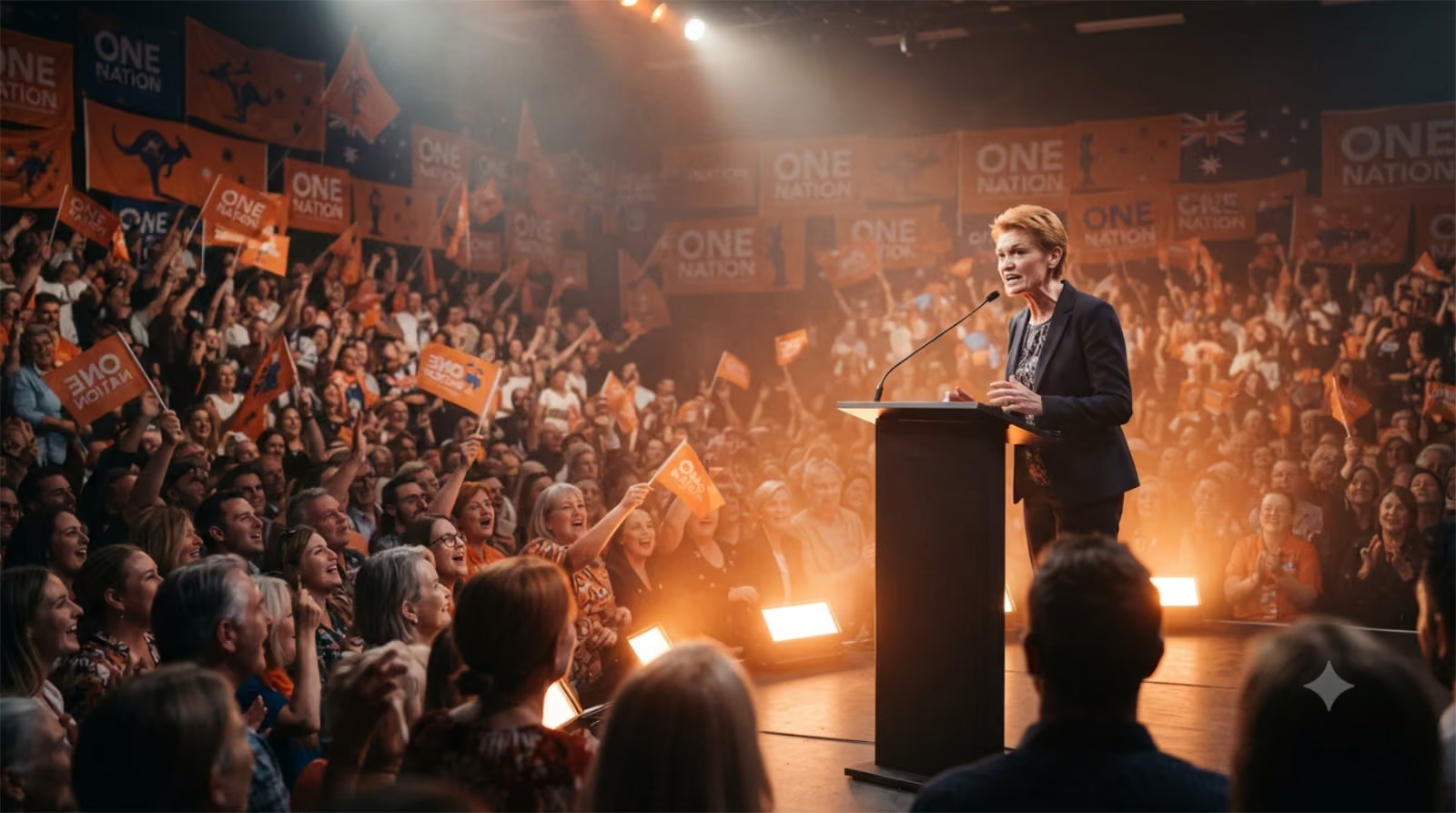
- At the National Press Club in June 2026, Pauline Hanson said Australia must be monocultural and that Australian workers are "on their phones, they don't work, they don't turn up, they actually are lazy." She then promised to overhaul workplace laws to make it easier to sack people. Separately, in a Sky News interview in February 2026, she said there are "no good Muslims." The Senate censured her for it.
- 40 per cent of Australia's aged care workforce were born overseas. 79 per cent of providers say they depend on migrant nurses just to keep their doors open. One Nation wants to cut the number of migrants coming to Australia by more than two thirds. The sector is already 35,000 workers short every year before any cuts.
- Australia currently has a carbon price. When Australian companies sell steel, aluminium, and other goods into Europe, they get a discount on the carbon charge Europe applies to imports because Australia has its own pricing. One Nation wants to scrap Australia's carbon price. Scrap it, and the discount disappears. Australian exporters pay the full charge. Canada, the UK, and Japan are building the same kind of system.
- Australia's mining industry made $253 billion in profit in 2024. Australians got back roughly 10 per cent of that through taxes and royalties. Norway runs the same kind of industry, takes 78 per cent for the public, and has built a national savings fund worth $3.3 trillion. One Nation has no policy to change how much mining companies pay. Its biggest donor built her fortune on iron ore.
- One Nation wants Australia to leave the United Nations, the World Health Organisation, and the World Economic Forum. It wants to shut down the Department of Climate Change and the agency that supports Indigenous Australians. These aren't ideas on the fringes of the party. They're the official platform.
When the policies hit
The immigration cap that started in 2029 removed the workers keeping the aged care sector running. There was no plan to train enough Australians to replace them. The sector was already 35,000 workers short every year. The policy didn't solve that. It made it worse and locked it in.
When the carbon price was scrapped in 2029, Australian companies selling goods into Europe lost the discount that had been keeping their costs down. The full charge applied straight away to steel, aluminium, cement, and fertiliser. Companies that had been planning years ahead suddenly faced a cost they hadn't budgeted for.
The agency supporting Indigenous Australians closed. The money that had funded health, housing, and education in those communities went back into general government spending. Welcome to Country was defunded. Indigenous identity recognition was removed from government forms. The government stopped tracking the gap between Indigenous and non-Indigenous Australians in any meaningful way.
And the iron ore kept coming out of the ground.
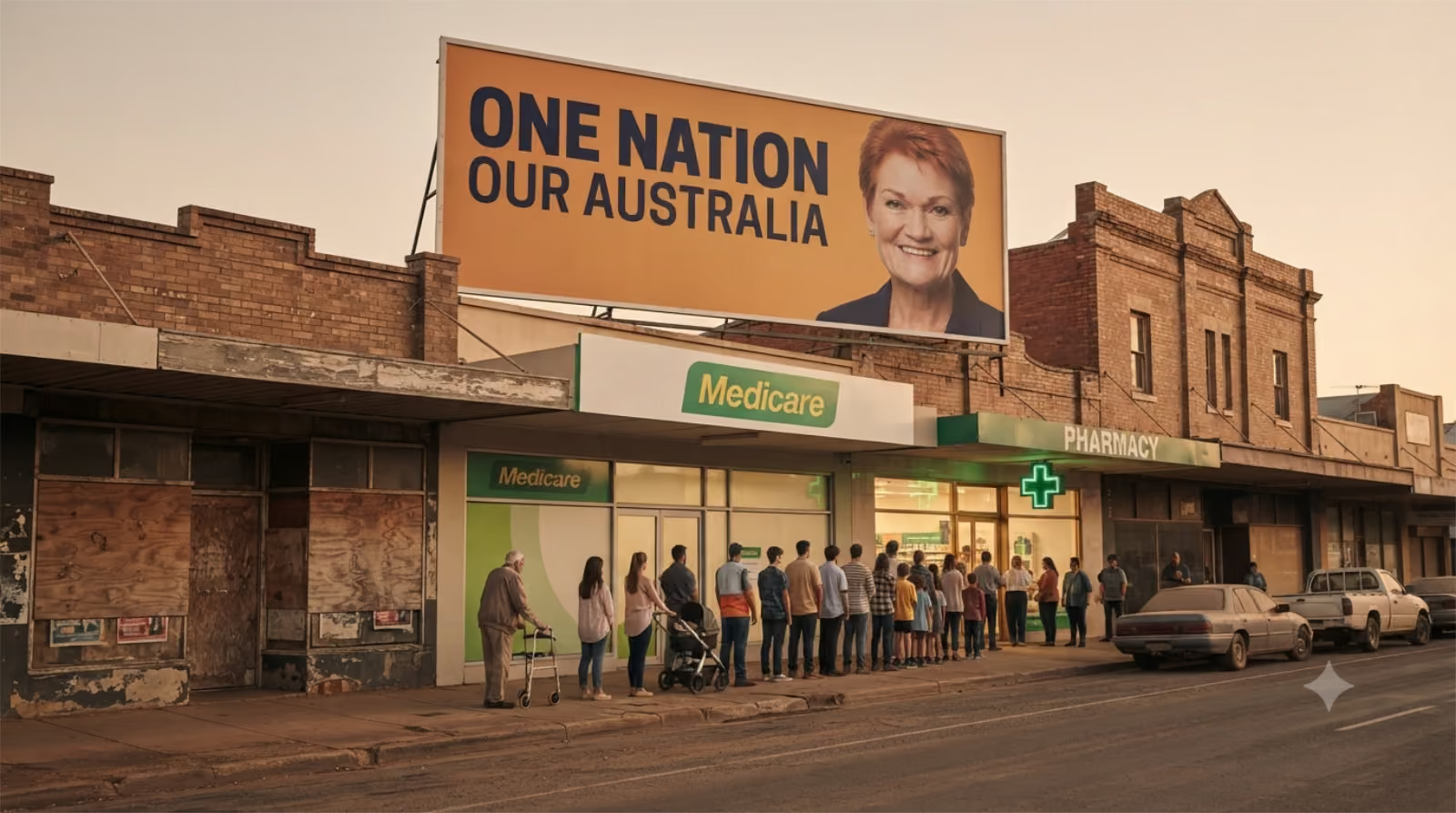
The policy didn't solve the shortage. It made it worse and locked it in.
What 2040 looks like
The aged care system is in crisis. Waiting lists for a residential care bed run past two years in regional Queensland, northern New South Wales, and rural Western Australia. When someone doesn't get the care they need, it doesn't show up in a report. There's no complaint filed, no statistic recorded. It's just a person not getting help.
The economy is smaller than it should be. Cutting migration by two thirds meant fewer workers, less tax coming in, and slower growth. Skilled people who might have built careers here went to Canada, Germany, and the UK instead. The signal that some people weren't welcome travelled fast and far. International students stopped coming within three years. Industries that ran on migrant workers got smaller. Less tax revenue meant fewer services for everyone.
Australian exporters have been paying more to sell into European markets since 2029. Some industries absorbed the cost. Others lost their customers and closed. The jobs in solar and wind energy that would have gone to regional towns went to other countries instead. Meanwhile floods, fires, and droughts kept getting worse and more expensive. Every state government now carries the cost of that permanently.
Mining profits kept flowing overseas, largely untaxed, with nothing set aside for future generations. Norway built free universities, a properly funded health system, and climate infrastructure from the same kind of resource wealth. Australia built nothing equivalent. The next generation inherited a trillion-dollar national debt.
When a government tells people officially that some cultures don't belong here, it doesn't just change the law. It tells some people that others are fair targets. The networks that pushed One Nation into power had more than a decade to make that feel normal. Muslim Australians, Asian Australians, and Indigenous Australians move through a country where official policy made them unwelcome. Some communities pulled back. Some people left. The day-to-day safety of visibly different Australians in parts of this country changed in ways that don't appear in official numbers but are felt every day.
Without targeted support, without the agency designed to help them, without recognition in the systems that govern their lives, Indigenous Australians fell further behind on health, education, housing, and life expectancy. The communities most affected were remote. That's exactly what made it easy for the government to keep going.
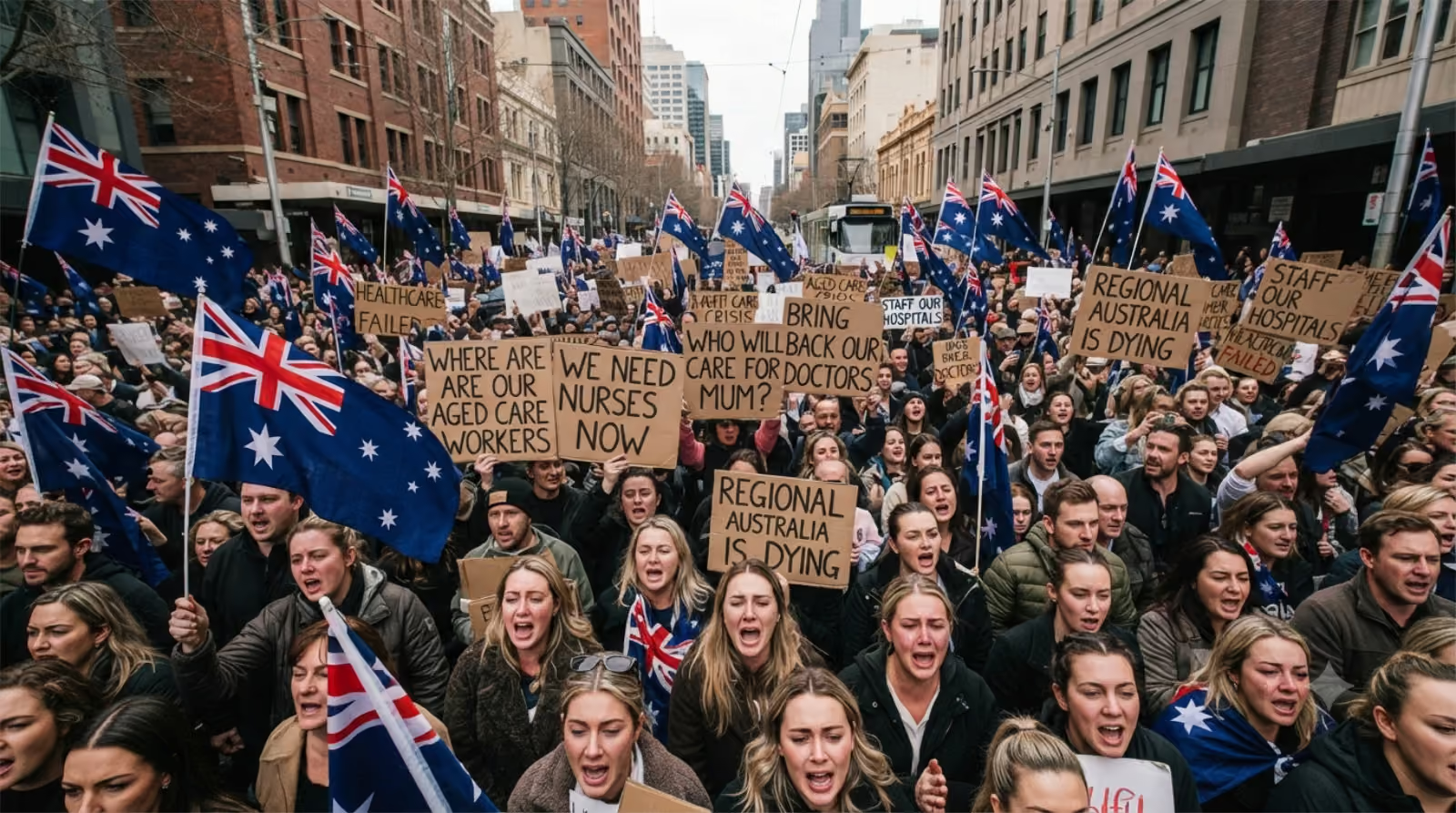
When someone doesn't get the care they need, it doesn't show up in a report. There's no complaint filed, no statistic recorded. It's just a person not getting help.
Who the ledger favours
One Nation told its voters the system was rigged against them. That was partly right. What it didn't say was who would be running the system next.
The workplace law changes made it easier for employers to cut pay and conditions without a union in the room. The workers who felt it most were in casual and part-time jobs, mostly women, mostly in regional areas. Their penalty rates were cut. Their income fell. The people One Nation said it was fighting for ended up working more hours for less money.
Walking away from the UN, the WHO, and the WEF meant Australia left every room where the rules that affect its trade, health, and safety were being decided. You don't hold influence from outside those conversations. You just get left out.
The iron ore kept coming out of the ground. The profits kept going overseas. The national savings fund was never built. Rinehart's fortune grew.
One Nation built its name on the idea that powerful people had taken over Australian politics and were using it for themselves. They were right. One Nation just became the new way that happened.
What would have to be true
This scenario is possible but it isn't inevitable. Three things would need to go right.
One Nation could win government after the 2028 election. With one lower house seat in 2026, winning enough to govern alone would be a bigger shift in Australian politics than anything we've seen before. A more likely path is One Nation holding enough Senate spots and cross-bench seats to force a coalition partner to adopt its policies. Most of the same outcomes follow either way. What matters is the policy, and the evidence that One Nation can push it through is already in its voting record.
The immigration cap could hold without breaking the care system. It couldn't. 40 per cent of aged care workers were born overseas. 79 per cent of providers depend on migrant nurses. The cap doesn't come with a plan to train enough Australians to replace them, because One Nation hasn't proposed one. The sector was already 35,000 workers short every year. Cutting migration makes that worse, not better.
Scrapping the Paris Agreement would protect Australian businesses from global climate costs. It wouldn't. The carbon charge Europe applies to Australian exports isn't part of the Paris Agreement. It's a separate trade rule Europe set for itself. It applies based on whether Australia has its own carbon price, not on what Australia has signed. Scrap the price, pay the charge. The UK and Canada are building the same kind of rule. The shift to clean energy is being driven by businesses and investors around the world. A government decision in Canberra doesn't change that.
Signal sources
- The Nightly, 'Pauline Hanson's full speech at the National Press Club'
- The Nightly, 'Pauline Hanson vows to make Australia a monocultural society'
- SmartCompany, 'Pauline Hanson says businesses need more power to sack workers'
- SBS News, 'Pauline Hanson faces storm over anti-Muslim comments'
- The Guardian, 'Pauline Hanson free flight Gina Rinehart Hancock'
- Reuters, 'Pauline Hanson cashes in on Trump-like populism'
- DemosAU, 'One Nation lead grows as L/NP primary sinks to 18%'
- DemosAU, 'One Nation leads ALP and Coalition as voters sour on budget'
- The Conversation, 'What does One Nation actually believe in?'
- The Conversation, 'One Nation's surge continues in polls'
- ABC News, 'One Nation policy platforms'
- Build a Ballot, 'One Nation policies'
- Mining and Energy Union, 'One Nation's anti-worker record'
- SBS NITV, 'Donnell Wallam and Hancock Prospecting'
- CNN, 'Netball Australia: Gina Rinehart pulls sponsorship'
- Ageing Australia, 'Solving workforce issues in Queensland'
- CEDA, 'Duty of care: How to fix the aged care worker shortage'
- National Seniors Australia, 'Migrants required to meet aged care shortages'
- Euronews, 'EU's carbon border tax on heavy industry goods goes into effect'
- Cainz, 'Is the Australian mining industry doing enough for Australians?'
- Australia Institute, 'Australians have never received their fair share of mining export profits'
- Discovery Alert, 'Norway's resource taxation: strategic lessons for Australia's future'
What this means for your business
Professional services
Your ability to attract the best people depends on Australia being somewhere skilled workers want to come. That reputation doesn't need a new law to be damaged. It just needs the headlines. Graduates in Mumbai, Manila, and Shanghai are reading the same news you are and making decisions about where to build their careers. The clients who rely on you for advice on international markets are watching Australia's standing in the world shift. The cost of carbon on exports is already changing which industries are worth advising on. Your advice needs to reflect the world as it actually is.
Healthcare
40 per cent of your aged care workforce were born overseas. That's your team today. Under a 130,000 visa cap, the people on temporary visas face having those visas cancelled. The hours they work won't be picked up by other staff because there are no other staff. The question isn't whether your organisation has the right values. It's whether you've mapped out what your roster looks like in 18 months if one in three of your care workers can no longer legally stay. That answer tells you whether you're ahead of this or behind it.
Retail
The penalty rates, casual conversion rights, and bargaining protections your workforce relies on are exactly what One Nation's workplace agenda targets. Take those away and your labour costs might fall in the short term. But so will the spending power of the people who shop in your stores. People who earn less spend less. The regions where One Nation polls strongest are the places where that matters most to your sales numbers.
Consumer products
Your supply chain depends on migrant workers at multiple points. Fresh produce from the Riverina and Lockyer Valley relies on workers from the Pacific and South-East Asia whose visas are directly in the firing line. Cutting migration doesn't make your inputs cheaper. In many cases it makes them more expensive because there are fewer people available to do the work. Australia's social reputation also travels. In markets where buyers care about where their products come from, that matters.
Education
International students are a significant part of your revenue. The monoculture message doesn't separate student visas from other migration, and students from South and South-East Asia hear it clearly. Decisions about where to study are made years before arrival. The people who run your institutions, teachers, support staff, allied health workers, are drawn heavily from migrant communities. The policy that reduces your student numbers is the same one that reduces your staffing pool. Plan for both at once.
The question worth sitting with
One Nation's rise was built on genuine economic pain. Unaffordable housing, stagnant wages, the feeling that the people in power had stopped caring. That pain was real.
But social media platforms built to profit from anger pointed that pain in a specific direction. Toward immigrants. Toward minorities. Away from the mining companies taking $253 billion a year in profit and giving back 10 per cent. Away from the tax rules that made housing a wealth-building tool for people who already had wealth. Away from the policy settings that held wages down for a decade.
The people who voted for One Nation weren't wrong to be angry. They were pointed at the wrong targets. And by 2040 the ledger is clear. The mining companies had their best decade on record. The aged care system fell apart. The battlers worked more for less. Ask yourself who pointed the anger, and who it kept safe.